
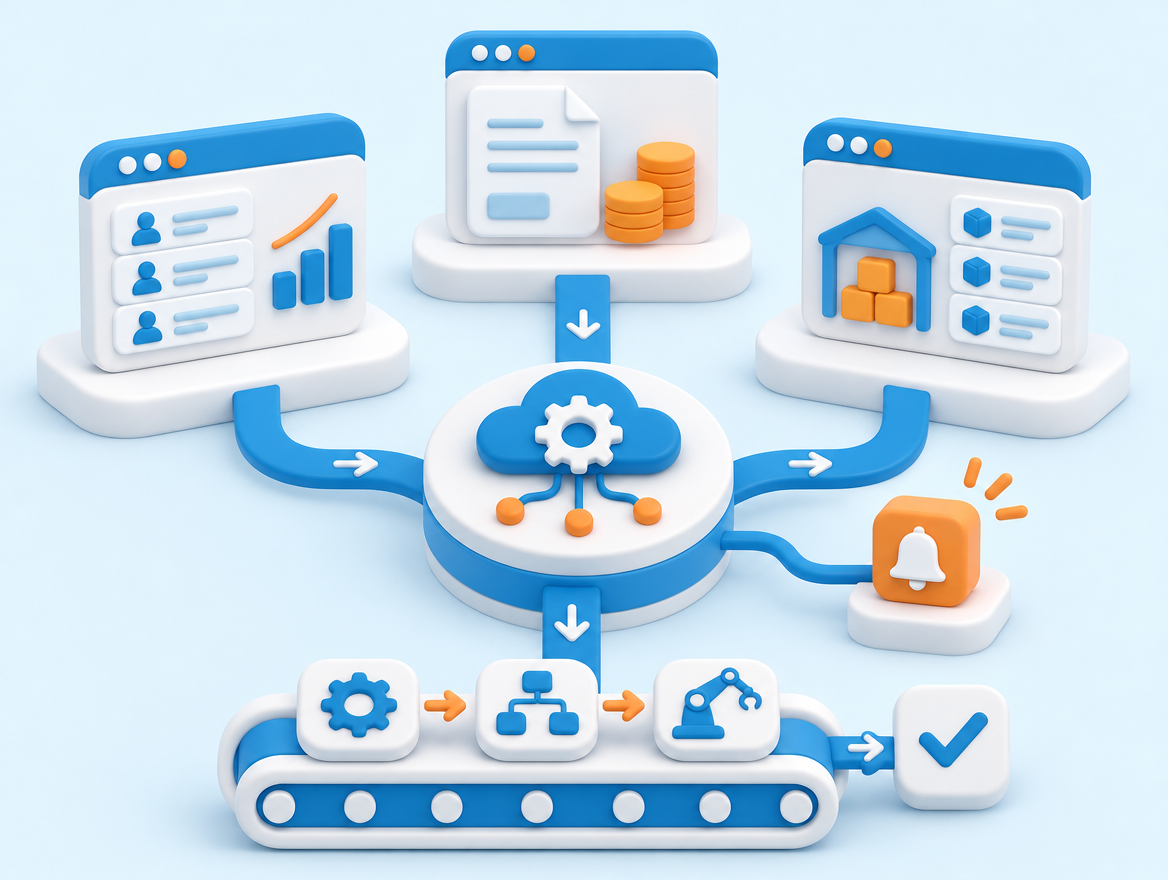

When work moves between systems
Manual copying, scattered notifications and unclear handovers can slow everyday work. We start by understanding where information originates, who needs it and what should happen next. The integration is then designed around a defined process and the capabilities of each system.
What the service includes

Connect business systems
Exchange agreed information between applications through supported APIs and integration methods. We review access permissions, data structures and service limitations before defining the scope.

Automate repeatable steps
Organise routine notifications, data transfers and task creation around clear triggers. We agree which steps can run automatically and which need a person to review or approve them.

Keep information consistent
Map the fields exchanged between systems and define how updates are handled. The aim is to reduce repeated entry while making the source and use of each field clear.

Handle exceptions deliberately
Plan for failed requests, incomplete data and unavailable services. Testing covers expected scenarios and the agreed approach to errors, retries and operational follow-up.
Practical integration scenarios
A website enquiry may create a record in your business system. An approved request may trigger a notification or send agreed data to another service. An online store may exchange order information with shipping or accounting tools. Each scenario is assessed against the APIs and permissions actually available; not every system supports every connection.

A clear process from start to finish
We begin with the business requirement, agree the deliverables and review progress with you. Testing and handover are planned as part of the work, with any ongoing support defined separately.

01
Understand the requirement
02
Define the scope
03
Build and test
04
Launch and hand over
What we agree before implementation
We identify the systems involved, the information to exchange, the triggering events and the people responsible for access. The scope also covers testing, deployment and handover. External subscriptions, API limits and any ongoing support requirements are clarified separately.